
Engaging Alzheimer’s Residents: Lessons Learned from Our Christmas Picture Bingo Event

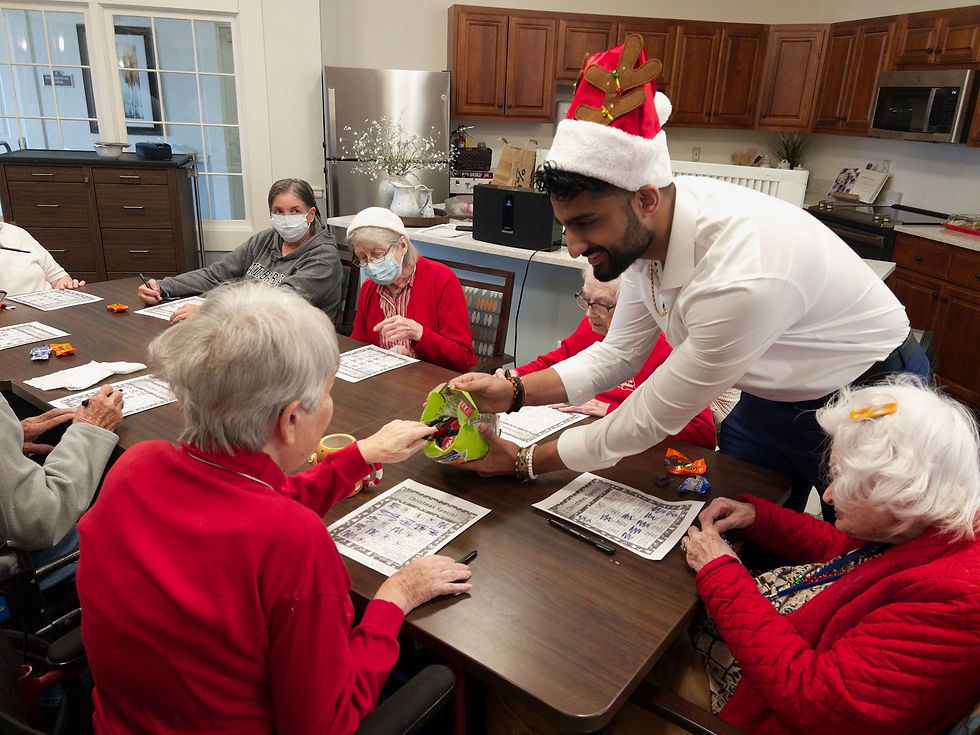
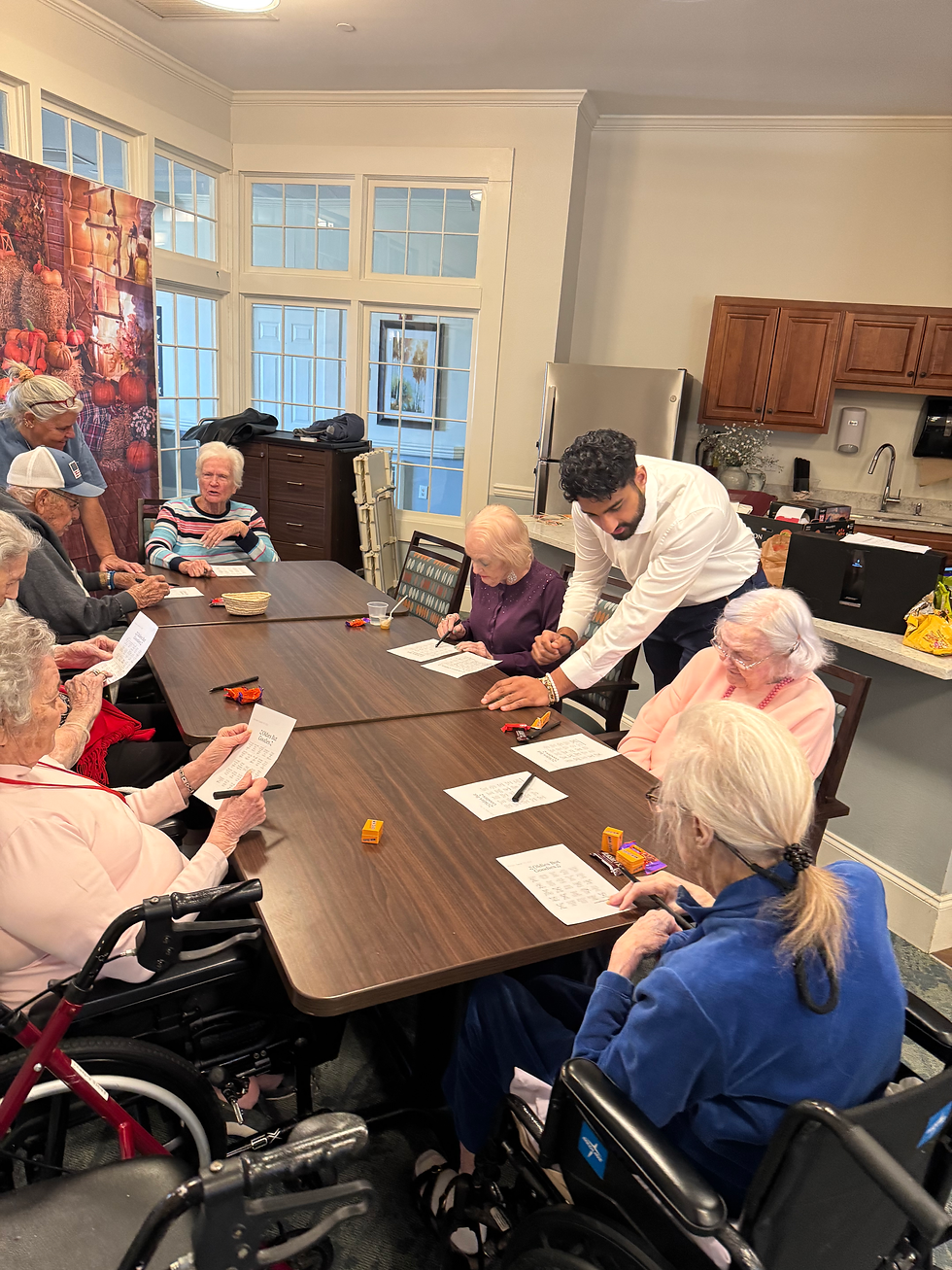
On December 21, 2025, I led a small team of three volunteers to organize a Christmas-themed Bingo event at Terra Bella Little Avenue Nursing Home. We were able to gather 12 residents in Memory Care who wanted to participate in the activity, many of whom live with Alzheimer’s and dementia. Our goal was to create an activity that would engage them meaningfully during the holiday season. Having seen success with musical bingo in the past, we decided to try something different this time: Picture Bingo. This experiment revealed important insights about how residents with cognitive impairments interact with activities and what works best for them.

Why Picture Bingo Presents a Unique Challenge
Picture Bingo might seem like a simple game, but for people with Alzheimer’s and dementia, it can be quite demanding. The game requires residents to:
Look at a card filled with multiple images
Scan and compare those images to a called-out picture
Decide if there is a match
Take action by marking the card
This process involves several cognitive functions such as visual processing, working memory, and executive function. Unfortunately, these are the very abilities that dementia affects early on. Even matching what seems like a straightforward image can feel overwhelming.
Many residents experience visual recognition problems such as:
Difficulty recognizing images (visual agnosia)
Trouble distinguishing similar shapes
Misinterpreting symbols or pictures
For example, a flower on a bingo card might not register as the same flower when called out. This is not a matter of “missing” the image but rather perceiving it differently. These challenges make picture bingo a tough game for many residents.

Observations from Our Christmas Picture Bingo Event
During the event, we noticed several key points:
Some residents struggled to identify pictures despite repeated calls.
A few residents showed signs of frustration or confusion.
Others enjoyed the social aspect but found the matching task difficult.
Volunteers had to provide extra support and encouragement.
These observations confirmed that picture bingo demands cognitive skills that many residents find challenging. While the game was not a failure, it highlighted the need to tailor activities carefully.

How Music-Based Activities Outperform Picture Bingo
In contrast, music-based activities like musical bingo have shown better results. Music offers several advantages:
It does not require matching images
It does not rely on vision
It does not require remembering complex rules
It activates brain networks that remain preserved longer in dementia
Because picture bingo depends on damaged cognitive systems, it often leads to frustration or disengagement. Music taps into preserved brain areas, making it easier and more enjoyable for residents to participate.
Takeaways From the Event
Overall, the event was a resounding success, as the residents not only had a fun and amazing time interacting with all of us volunteers but also enjoyed reconnecting with each other in a warm and festive atmosphere. It had been quite some time since they had the opportunity to engage in a social event of this nature, and the joy on their faces was palpable as they realized they could feel connected again, especially during the holiday season.
Moreover, the Christmas-themed picture bingo game was a particular highlight of the day, bringing immense joy to the residents as they eagerly matched the cute little pictures of various Christmas objects and holiday-related items. The laughter and cheer that resonated throughout the room as they played together created a heartwarming atmosphere.
Not only did the residents have a delightful time, but the event also offered the dedicated staff and nurses at Terra Bella Little Avenue a much-needed respite from their relentless work routines. Many of the staff members expressed their gratitude and relief at seeing us volunteers, as our presence allowed them to catch their breath and take a moment away from their demanding responsibilities. The smiles and thank-yous from the staff highlighted the positive impact of the event, emphasizing the importance of community support and the joy that comes from coming together for a common cause.
The day was not just about the residents; it was also an opportunity for the staff to recharge, knowing that their residents were engaged and happy, which in turn, allowed them to return to their duties with renewed energy and enthusiasm. Ultimately, the event served as a beautiful reminder of the power of connection and the joy that can be found in shared experiences, especially during the holiday season.

What We Learned and What Comes Next
This experiment gave us a deeper understanding of the unique needs of nursing home residents with Alzheimer’s and dementia. It reinforced that activities involving music are more accessible and engaging for this population. Moving forward, we plan to:
Continue using music-based activities as the core of our programming
Explore ways to simplify visual tasks for residents who enjoy picture games
Train volunteers to recognize signs of cognitive overload and adjust accordingly
Keep testing new ideas while focusing on what works best for residents’ abilities

Comments